Learning how to store a folding electric wheelchair long term protects its battery, frame, electronics, and daily reliability. The process involves more than folding the chair and covering it. Moisture, dust, temperature changes, and neglected batteries can create expensive problems during storage. A quiet storage corner is not always a suitable one.
This guide explains how to store a folding electric wheelchair long term using practical care steps. It covers cleaning, battery preparation, tire support, folding joints, charger placement, and periodic inspections. Always check the manufacturer’s manual before following general advice. Battery chemistry and charging systems differ between models. Lithium-ion batteries, for example, may require different storage levels than lead-acid batteries.
Keep the wheelchair indoors in a cool, dry, and secure area. Wipe mud from the wheels and remove moisture before folding the frame. Inspect cables for cuts, then keep connectors away from damp floors. Store the charger separately, without tightly bending its cable. Check tire pressure and release unnecessary weight from the seat. If the battery is removable, place it according to the manufacturer’s instructions. Some batteries need occasional charging, while others should remain partly charged. Do not guess.
A monthly inspection can reveal corrosion, flat tires, or unusual battery swelling early. I have found that simple reminders are easy to ignore, especially when the chair is rarely used. That is a weakness in many storage plans. Record the storage date and inspection results near the chair. Before using it again, test the brakes, controls, folding lock, lights, and battery range in a safe area. Reliability begins before the next journey.
Prepare the Folding Electric Wheelchair Before Storage
Before storing a folding electric wheelchair, clean and inspect every working part. Remove dust from the frame, wheels, footrests, joystick, and folding joints. Use a slightly damp cloth, then dry the chair completely. Moisture trapped near electrical connections can cause corrosion. I have learned this after finding rust around a neglected hinge.
Check the tires, brakes, seat, and armrests for damage. Tighten loose fasteners, but do not force stiff folding mechanisms. Test the wheelchair briefly before storage. It is easier to identify a weak brake now than months later. Remove the battery if the user manual allows it. Store it according to the battery maker’s instructions, including the recommended charge level. Do not leave a lithium battery fully empty for a long period. Keep the charger dry and inspect its cable for cuts.
Choose a cool, dry, and secure indoor space. Avoid direct sunlight, damp garages, and areas with extreme temperature changes. Fold the wheelchair gently, without placing weight on the joystick or control panel. Cover it with breathable fabric rather than sealed plastic, which can trap condensation. Check the chair and battery every few weeks. My earlier mistake was assuming storage meant ignoring the equipment. A short inspection can reveal soft tires, moisture, or a slowly draining battery before the wheelchair is needed again.
Choose a Safe Storage Environment and Position
Long-term storage begins with the environment. Choose a dry, clean room with steady temperatures and limited sunlight. A spare room, enclosed garage, or accessible storage area can work well. Avoid damp basements, outdoor sheds, and places near leaking pipes. Moisture can corrode charging ports, wiring, and metal joints. Heat may also damage electrical components and reduce battery performance.
Clear a stable space before folding the wheelchair. Keep it away from heaters, windows, chemicals, and busy walkways. Place it upright on a level floor, unless the user manual specifies another position. Do not leave weight pressing against the control panel, armrests, or folded frame. A breathable cover can reduce dust, but plastic sheeting may trap condensation. Leave room around the chair for air movement. Small details matter.
Before storage, clean mud and moisture from the wheels and frame. Charge or disconnect the battery according to its instructions, then inspect it periodically. A qualified technician should check unusual swelling, leakage, or damaged cables. Do not store loose objects on top of the chair. I once overlooked a small damp patch beneath stored equipment; it caused early surface rust. That mistake changed my routine. Now I check the floor, cover, and storage position every few weeks. The schedule may feel excessive, but neglect is harder to repair.
Check and Maintain the Wheelchair During Storage
How to Store a Folding Electric Wheelchair Long Term?
Before storage, clean the frame, seat, and wheels with a slightly damp cloth. Dry every surface carefully, especially around folding joints and electrical connections. Dirt can hide cracks, loose bolts, or early rust. Check the tires for damage and correct pressure according to the user manual. Test the brakes and confirm that the wheelchair folds and locks smoothly. Never force a stiff joint. I once overlooked a small cable bend, and it became worse after several weeks.
The battery needs careful attention. Follow the battery maker’s charging and storage instructions, because charging limits can differ. Store it in a cool, dry place away from direct sunlight, moisture, and heat sources. Do not leave the battery completely empty for months. Check its condition periodically, but avoid charging a damaged, swollen, leaking, or unusually hot battery. Stop using it immediately and ask a qualified service professional for advice. Safety comes first.
Cover the wheelchair with breathable fabric, not airtight plastic. Keep it away from damp floors, chemicals, and heavy objects. Every month, inspect the frame, wheels, brakes, cables, controller, and folding mechanism. Charge the battery only as recommended, then test the chair in a clear area. Listen for clicking, grinding, or weak braking. My own storage routine is not perfect; I sometimes forget the monthly inspection. A written reminder helps prevent that mistake.
How to Store a Folding Electric Wheelchair Long Term?
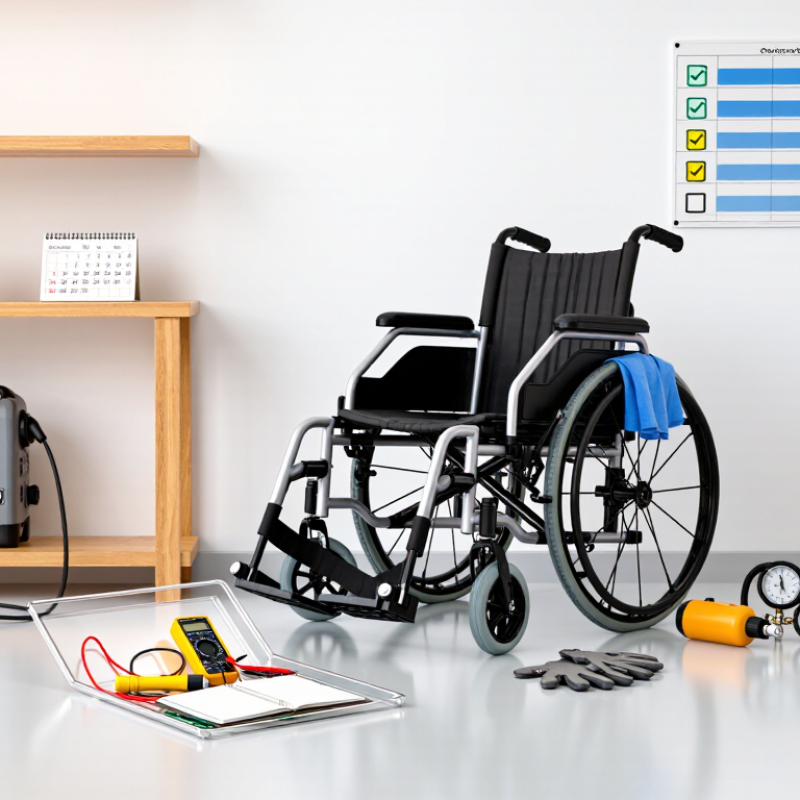
Recommended inspection intervals help protect the battery, tires, folding mechanism, brakes, and charging equipment during extended storage. Keep the wheelchair clean and dry, store it indoors, and follow the battery manufacturer's charging instructions.
Conclusion
How to store a folding electric wheelchair long term begins with thorough preparation. Before putting it away, fold the wheelchair correctly, remove personal items, and inspect the frame, wheels, brakes, controls, cables, and fasteners for signs of wear or damage. Clean away dust, dirt, and moisture, then dry every component completely to help prevent rust, corrosion, and electrical problems. Any necessary repairs should be completed before storage.
The battery also requires special attention. Charge it according to the manufacturer’s guidance, disconnect or remove it if appropriate, and keep it in a cool, dry place away from extreme temperatures. Store the wheelchair indoors on a level surface, protected from sunlight, humidity, dust, and accidental impacts. Avoid placing heavy objects on it or leaving pressure on the tires for long periods. During storage, inspect the wheelchair periodically, check the battery condition, rotate or adjust the wheels when needed, and perform a careful safety check before using it again.
 Welcare Wheelchair
